

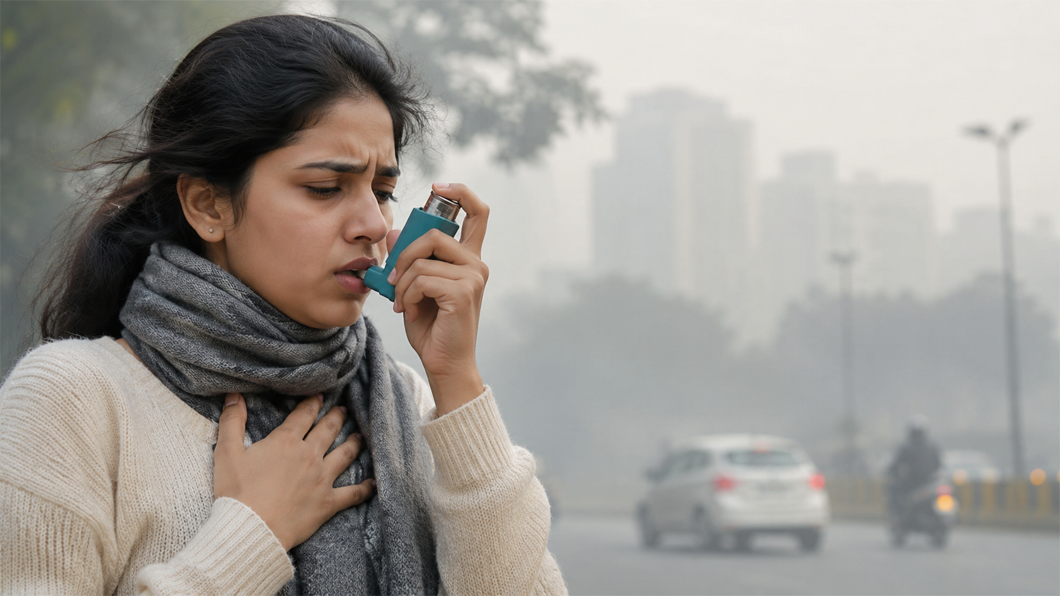
Have you noticed that your cough gets worse on days when the air feels dusty or polluted? Or that you feel breathless after spending some time outdoors? These changes are easy to dismiss as temporary irritation. But if they keep happening, your lungs may need attention.
Air pollution can affect anyone, but people with asthma and other respiratory conditions may feel its effects more strongly. Dust, vehicle emissions, smoke and tiny airborne particles can irritate the airways and make existing breathing problems worse.
Let’s look at how pollution affects your lungs, which symptoms you should watch for and when it is time to see a doctor.
When you breathe polluted air, tiny particles and harmful gases can enter your respiratory system. Some particles travel deep into the lungs, irritating the airways and causing inflammation.
You may experience:
People who already have asthma, COPD or other lung conditions may notice these symptoms more often. Children and older adults can also be more vulnerable to the effects of poor air quality.
Yes. Pollution is a recognised trigger for asthma symptoms. When irritants enter the airways, they can cause inflammation and narrowing, making it harder to breathe.
You may notice coughing, wheezing, chest tightness or shortness of breath. Some people also find that they need their prescribed quick-relief inhaler more frequently on days with poor air quality.
If these symptoms keep returning, our asthma treatment in Bahadurgarh focuses on understanding what triggers your symptoms and helping you manage the condition with appropriate medical care.
Pollution does not cause every case of asthma, but it can make existing asthma harder to control. It can also aggravate symptoms in people with other respiratory conditions.
A cough after exposure to smoke or dust may settle once you move away from the trigger. But what if it continues for days or keeps coming back?
Persistent breathing symptoms can have several causes, including asthma, bronchitis, COPD and respiratory infections. Some signs worth paying attention to include:
If you are experiencing these symptoms, our chest specialist in Bahadurgarh can help assess your respiratory health and identify whether an underlying condition needs attention.
You do not have to wait until breathing becomes difficult to seek medical advice. If coughing, wheezing or breathlessness is affecting your daily activities, arrange a medical consultation.
Depending on your symptoms, the doctor may recommend:
You may not be able to control the air outside, but you can make a few changes to reduce your exposure
These steps can help reduce exposure, but they cannot replace medical attention when symptoms persist.
Breathing difficulties can affect simple things like walking, climbing stairs or getting a good night’s sleep. If you find yourself adjusting your routine because of coughing or breathlessness, it is worth getting checked.
At Medark Hospital, we assess respiratory symptoms to understand their possible causes and recommend appropriate care. If you are looking for breathing problem treatment in Bahadurgarh, our team can guide you through the evaluation and treatment process based on your individual needs.
Do not keep adjusting your daily routine around breathing difficulties. Find out what is causing them and seek the right medical advice.
Air pollution can contribute to respiratory problems and trigger asthma symptoms. However, asthma develops due to several factors, including genetic and environmental influences.
You may notice symptoms getting worse after exposure to dust, smoke or polluted air. However, similar symptoms can have other causes, so a medical evaluation is important.
Yes. Pollutants can irritate the airways and trigger coughing, wheezing, chest tightness and breathlessness in people with asthma.
Consult a specialist if you have a persistent cough, repeated wheezing, unexplained breathlessness or chest tightness that affects your sleep or daily activities.
A well-fitting N95 respirator can reduce exposure to fine airborne particles. However, it does not filter every harmful gas or pollutant, so other precautions are also important.
Author: Dr Dharmendra Rathi
MD Physician, DNB Medicine
Fellowship in Diabetes Mellitus (Liverpool, UK)
Category: Respiratory Health | Asthma & Breathing Problems
Medark Hospital

Medark Hospital
Gali no. 5, Main Patel Nagar Road,
Patel Nagar, Bahadurgarh,
Bahadurgh, Haryana -124 507
