

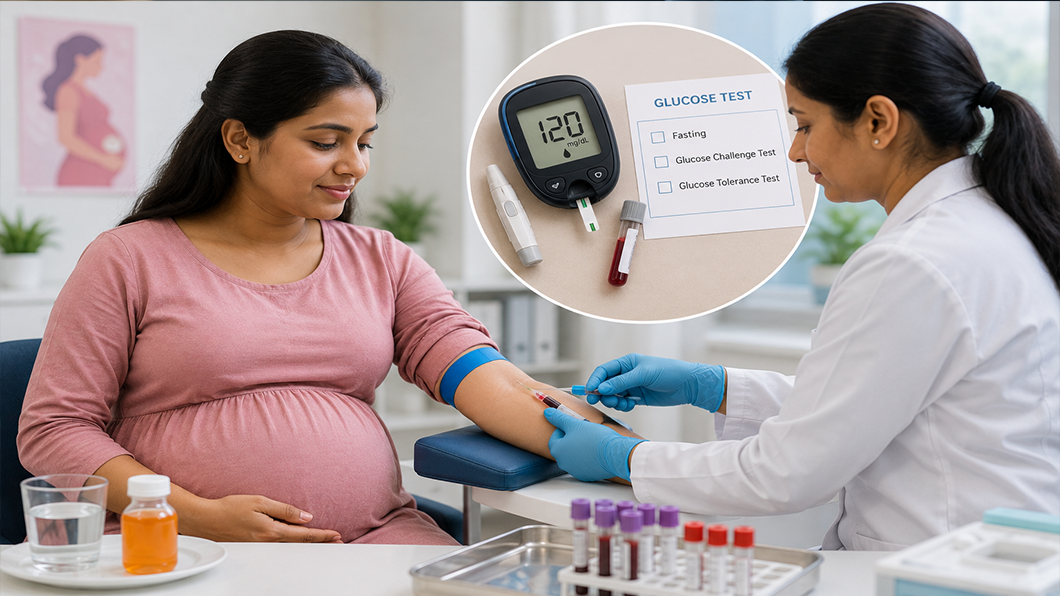
By the time you’re halfway through your pregnancy, you’ve probably lost count of how many blood tests you’ve already had.
So, when your doctor mentions another one, it’s natural to wonder whether it’s really necessary.
The glucose test isn’t just another routine investigation. It’s done to look for gestational diabetes, a condition that often develops without obvious symptoms. Most women feel completely well, which is exactly why screening becomes important for pregnancy health.
Pregnancy changes the way your body works in many ways. One of those changes involves how your body handles sugar.
Sometimes, pregnancy hormones make it difficult for insulin to keep blood sugar under control. This condition is called gestational diabetes.
It doesn’t mean you had diabetes before pregnancy, and in many women, blood sugar returns to normal after delivery. Even so, it shouldn’t be ignored because uncontrolled sugar levels can affect both mother and baby.
That’s why doctors recommend a gestational diabetes test as part of routine antenatal care.
That’s probably the biggest reason some mothers think about postponing the test.
The truth is, gestational diabetes usually doesn’t make you feel sick.
There may be no warning signs at all. The baby may be growing well, and your pregnancy may seem perfectly normal. Without testing, the condition can easily remain unnoticed until complications develop.
Routine screening helps doctors identify it early, when it’s usually much easier to manage.
Not every woman undergoes the same investigation. Your obstetrician decides the most appropriate test based on your pregnancy and medical history.
This is commonly used as the first screening test
You’ll be asked to drink a glucose solution, and a blood sample is collected after an hour. In many cases, fasting isn’t required.
If the result falls outside the expected range, your doctor may recommend further evaluation.
The Oral Glucose Tolerance Test gives a more detailed assessment of how your body processes sugar.
It usually requires fasting. After a fasting blood sample is collected, you’ll drink a glucose solution. Additional blood samples are taken over the next few hours to see how your blood sugar changes.
The test takes longer, but it provides valuable information that helps doctors make an accurate diagnosis.
Preparing well makes the experience smoother.
Keep these points in mind:
If you’re unsure about anything, don’t hesitate to ask your healthcare provider beforehand.
An abnormal report isn’t a reason to panic.
Many women diagnosed with gestational diabetes go on to have healthy pregnancies.
Depending on your reports, your doctor may advise:
The earlier the condition is diagnosed, the easier it is to manage in most cases.
Pregnancy is full of milestones, but it’s also about preparing for what can’t always be seen.
The gestational diabetes test isn’t performed because doctors expect something to be wrong. It’s recommended because some conditions stay silent until they’re looked for. Finding them early helps protect both mother and baby throughout the rest of the pregnancy.
Every pregnancy deserves careful attention, not just when problems arise, but even when everything appears to be going well.
At Medark Hospital, our obstetricians guide mothers through every stage of pregnancy with regular check-ups, timely investigations, and personalised care. Whether you need routine glucose screening or specialised maternity services, we’re here to support you throughout your journey.
If you’re looking for a trusted pregnancy care hospital in Bahadurgarh, Medark Hospital offers comprehensive maternity care focused on the well-being of both mother and baby.

Medark Hospital
Gali no. 5, Main Patel Nagar Road,
Patel Nagar, Bahadurgarh,
Bahadurgh, Haryana -124 507
